Making Money With Jev: Ticket Classification, Lead Scoring, and Agent Routing
The previous two posts covered what Jev AI is and how to call it. This one answers the more practical question: can a capability like Jev ticket classification actually turn into money? The answer is yes, but you need the right approach — the Jev income model isn’t “sell the model,” it’s “sell the swap.”
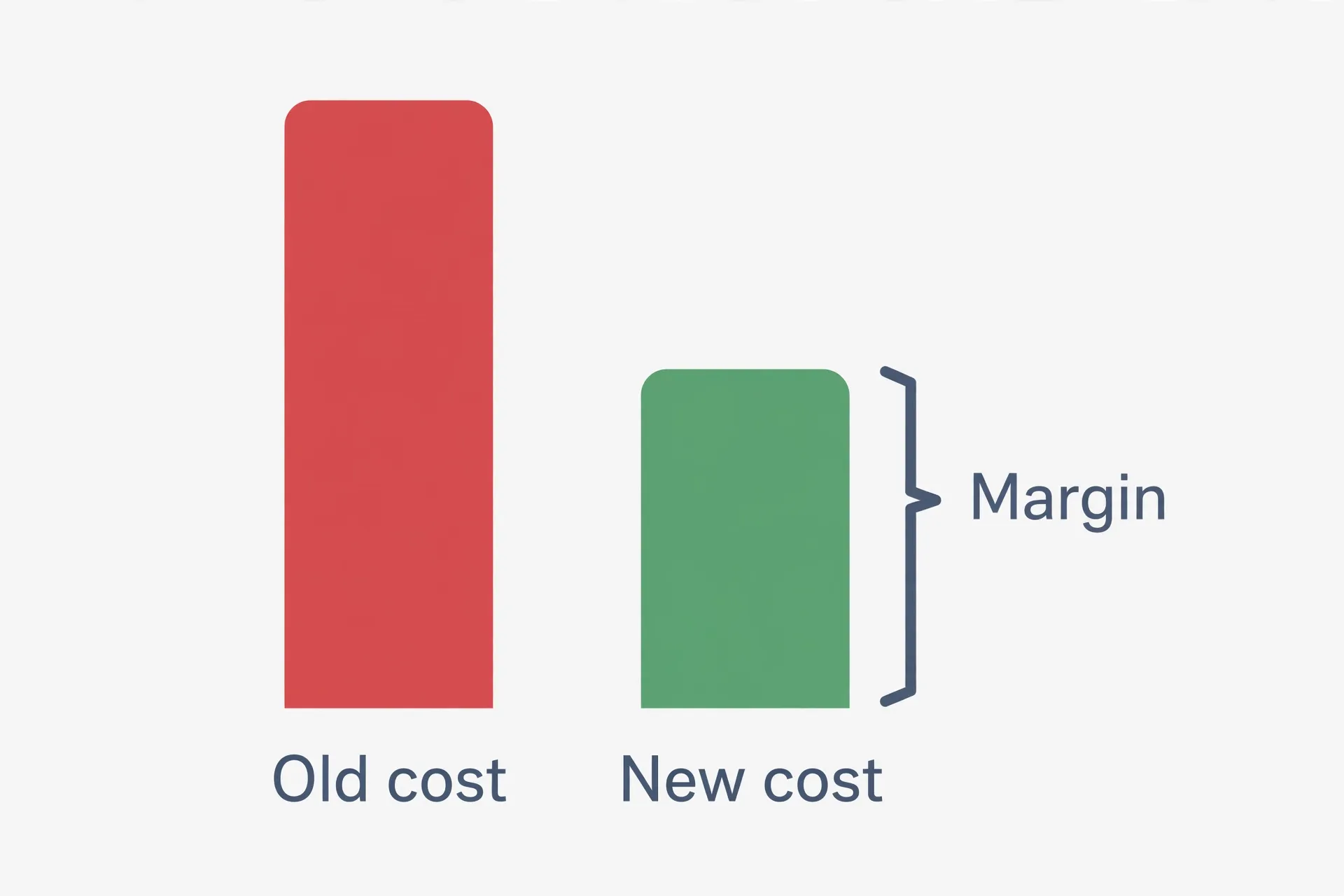
The income logic: swap an expensive classifier for a cheap one, keep the difference
Here’s the current state of the market: a huge number of systems today use an LLM to do classification — support-ticket routing, content moderation, lead scoring. Using an LLM for this is overkill: you just need one option picked, but it generates a whole block of text instead, and you still have to write parsing code and retry logic to guard against format drift.
Jev’s whole positioning is removing that “generate, then parse” layer: it returns options and probabilities directly, in 70–500ms, at under $1 per 10,000 calls (estimated at 2,000 tokens per call). The official claim is 444x cheaper than existing approaches — that’s a self-reported number, so discount it — but the direction is correct: decision tasks are inherently cheaper to run on a decision model than on a chat model.
So the income logic is simple: find teams currently paying for expensive LLM-based classification, help them switch to Jev (or a Jev+LLM hybrid), and take a cut of what they save, or charge an implementation fee. You’re not selling AI — you’re selling cost reduction.
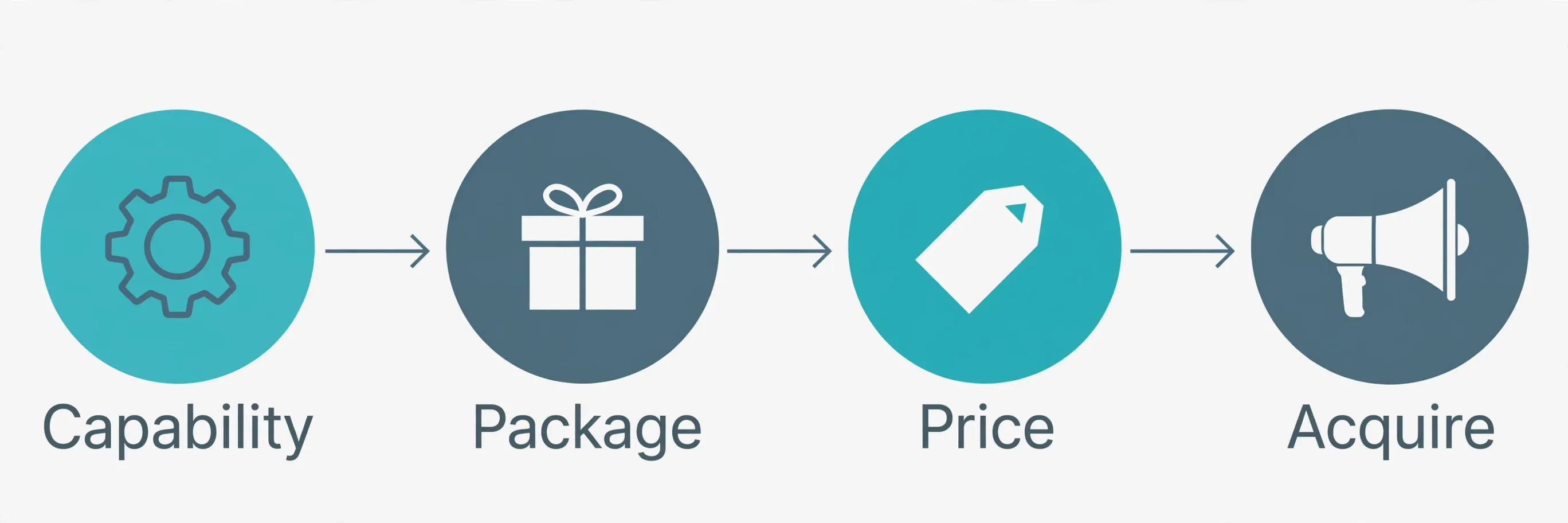
Scenario 1: support-ticket classification and routing (the most mature entry point)
This is the canonical example in Jev’s own docs, and it’s also the easiest scenario to sell:
- Input: a support ticket (“I was charged twice”) plus order records.
- One call, three questions: Choice picks the department (billing 0.08 / technical 0.85 / sales 0.07), Noul flags urgency, Score rates customer sentiment.
- Output: feeds directly into the ticketing system’s routing rules; anything below the confidence threshold routes to a human.
Who to sell to: small-to-mid-size SaaS, ecommerce, and online-education companies handling hundreds to thousands of tickets a day — they already have a ticketing system (Zendesk/Intercom/in-house) and are either paying a premium for LLM-based classification or still routing tickets manually.
How to charge, two models:
- Usage-based revenue share: e.g. charge $X per thousand classifications, taking a cut of what the client saves on their current LLM bill. Best for clients with steady volume — compounds over time.
- Project-based: a one-time implementation fee of $3K–$10K (covering the POC, threshold tuning, and ticketing-system integration), plus an annual maintenance fee. Best for traditional enterprises — predictable cash flow.
Deliverables: a POC (proof of concept) → a threshold-tuning report → integration code plus a monitoring dashboard (confidence distribution, human-handoff rate).
Scenario 2: sales lead scoring (the easiest to pitch on results)
- Input: lead information (company size, industry, behavioral data).
- Score rates the lead 1–5, and Noul flags “should sales follow up immediately.”
- Output: feeds directly into the CRM, so sales prioritizes high-scoring leads.
Why this sells well: lead-scoring results are quantifiable — “sales conversion improved X% after this went live” is a line that sells harder than any technical jargon on a proposal.
Pricing: charge based on outcomes or volume — a monthly base fee plus tiered pricing by scored-lead volume. Or, more aggressively, take a cut of the incremental deals closed — but that requires real confidence in your POC data.
Scenario 3: agent tool routing and validation (sell “guardrails” to agent builders)
Agent startups are everywhere in 2026, and every agent team shares the same pain point: having an LLM decide which tool to call is slow, expensive, and sometimes wrong.
- Input: the user’s one-line message, plus the list of available tools (each tool’s description becomes a Choice criterion).
- Jev’s Choice decides which tool to call; low-confidence cases fall back to a default flow or a human.
- The LLM’s only job is generating the final reply — “Jev decides, the LLM speaks.”
Who to sell to: startups building agent products, or automation teams inside larger companies. You’re not selling classification — you’re selling a guardrail: a faster, cheaper, more controllable decision layer for tool calling.
Pricing: mostly project-based, since every agent’s tool set is different and requires custom criteria and thresholds.
An honest disclaimer before you take a job: POC first, don’t promise what you can’t deliver
This section has to come first, because it determines whether you can sustain this business long-term:
- Accuracy is unverified: Jev’s 193x/444x figures are self-reported by TypeSafe. Before taking a job, you must run a POC against the client’s real historical data and produce a report — “on your data, accuracy is X%, human-handoff rate is Y%” — before you even discuss price.
- Jev will pick wrong sometimes: it guarantees valid output format, not correct picks. Your deliverable must include a confidence-threshold strategy and a human-fallback path — that’s your professional value-add, not a weakness to hide.
- Access itself has been unstable: the waitlist got cleared Sept 20, 2026 with free credit for new accounts, then new signups were paused two days later over demand (see our free-credit status page for the current state). Whether a client wants to bet their production system on a still-early-access product deserves a candid conversation. Start with a non-critical path (e.g. “suggested routing” with human confirmation before anything executes).
Our position: a mislabeled field is worse than no field at all — don’t fabricate credibility. An honest POC report closes more deals than an inflated benchmark ever will.
When not to use Jev
- When you need to generate text: writing replies, summaries, or code — that’s an LLM’s job, Jev can’t do it.
- When options can’t be enumerated: Choice needs a predefined option set; don’t force an open-ended question into it.
- When POC accuracy doesn’t clear the bar: if you test it on the client’s data and accuracy just isn’t there, say so — don’t push the sale. Fall back to an LLM with validation, or wait for the model to improve.
- Low-frequency, low-value scenarios: a few dozen calls a day where the savings don’t even cover your implementation fee — tell the client honestly it’s not worth doing. That’s also professionalism.
FAQ
What’s the fastest scenario to actually land with Jev?
Support-ticket classification. It’s the canonical example in the official docs, has the most standardized inputs and outputs, and clients immediately get why “classification can be this cheap.”
How much cheaper is Jev ticket classification than using an LLM?
TypeSafe’s claim is 444x cheaper (self-reported, pending independent verification). Based on public pricing, one ticket-triage call costs roughly $0.000084 — under $1 per 10,000 calls. Actual savings depend on the client’s current model and volume — work it out precisely during the POC.
What do I need to take on this kind of work?
Three things: the ability to call Jev (covered in the first two posts), a POC template (to measure accuracy and human-handoff rate on the client’s historical data), and a methodology for tuning thresholds. The technical bar is low; the real bar is being honest enough to run a POC before quoting a price.
Usage-based pricing or project-based — which is better?
Clients with steady volume (SaaS, ecommerce) suit usage-based revenue share, which compounds over time; traditional enterprises and one-off projects suit project-based pricing at $3K–$10K plus an annual maintenance fee. If you’re starting out, project-based gives you more predictable cash flow.
Signup access has been unstable — is it too early to take client work?
Not too early, but get the approach right: start with a non-critical path (suggested routing plus human confirmation), and hold off on full automation while access itself is still settling down. The upside of getting in early: almost no one is writing about this yet, so the case studies and content are yours to build.
References
- TypeSafe’s official site — the original source for the official benchmark data (193x faster, 444x cheaper); the body text above already notes this is self-reported and independently unverified.
Related reading: What Is Jev AI? · Jev AI Tutorial: Applying, Calling the API, and the Three Primitives · Home: how to make money with AI
More specific scenarios: Jev Email Triage as a Service · PR Pre-Review Service · Resume Screening Service (compliance caveats) · Jev vs. Open-Source Alternatives
Don't just read it — run the first job this week
Subscribe and get a 7-day validation checklist.
Subscribe free